
Get in touch
+91 83000 54973Blog-Details
Home / Blog-Details

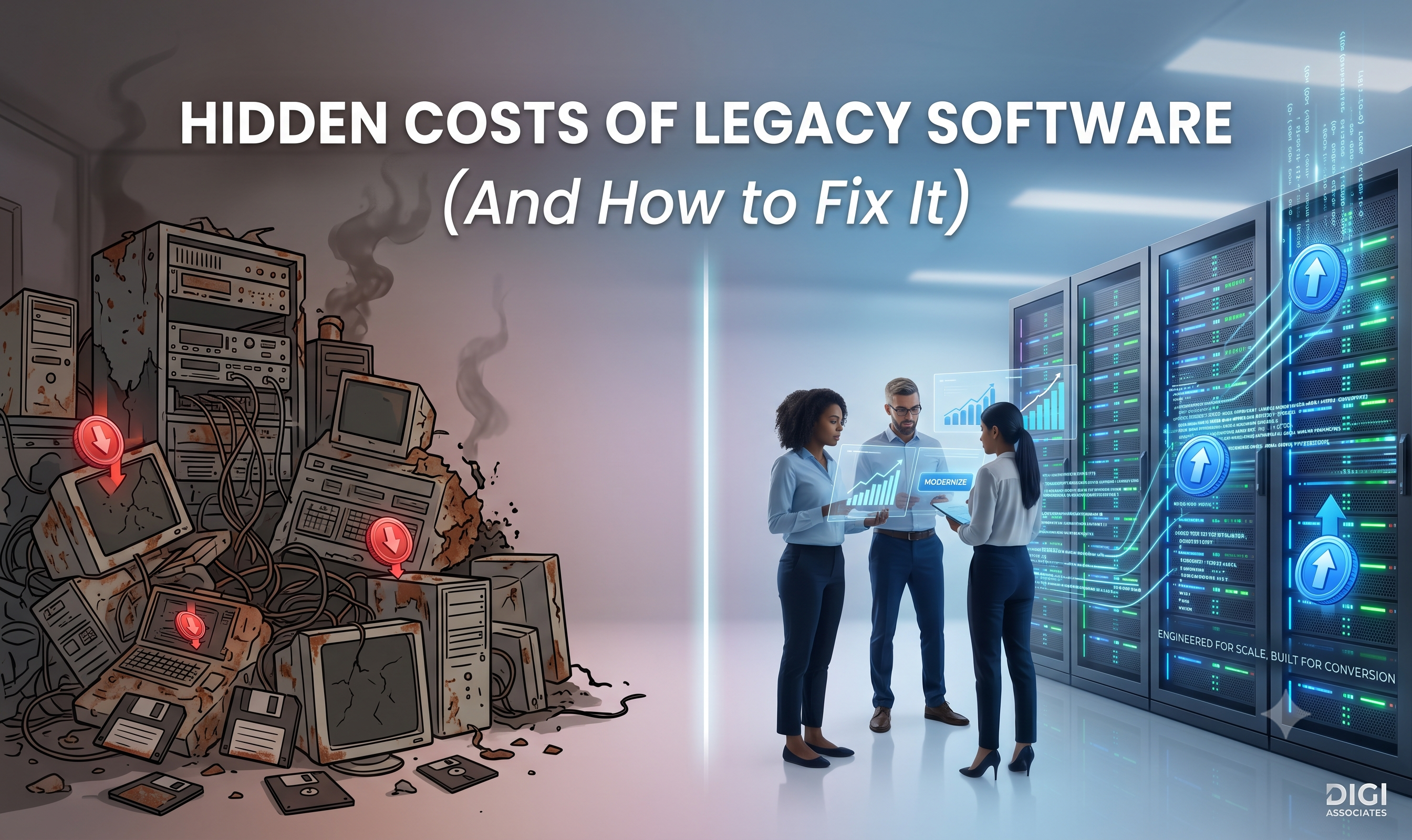
The Hidden Costs of Legacy Software (And How to Fix It)
Walk the floor of any major manufacturing plant or corporate office, and you will see incredible innovation. Yet, behind the scenes, many of these same market leaders are running their core operations on software built over a decade ago. Legacy platforms rarely fail loudly; they drain your IT budgets quietly.
Recent industry research shows that enterprises spend between 60% to 80% of their IT budgets simply keeping the lights on. That is critical capital trapped in system maintenance—capital that should be funding your next phase of digital growth. If your systems are slow, disconnected, or require constant manual workarounds, you aren't just dealing with an IT annoyance. You are hemorrhaging revenue.
What is Technical Debt in Business?
When companies delay necessary software updates to save money or time in the short term, they accumulate technical debt. Just like financial debt, technical debt compounds. The longer you wait to modernize your enterprise applications, the higher the "interest rate" you pay in the form of maintenance fees, lost productivity, and security risks.
1. The Maintenance Black Hole
Legacy systems can cost up to 3 times more to maintain than modern, cloud-native alternatives. Aging hardware and patched-together codebases require constant, specialized attention. Instead of building new features that capture high-intent buyers, your development teams (or expensive external consultants) spend their valuable time fixing bugs and managing system crashes.
2. The Integration Tax (Data Silos)
Does your legacy CRM talk seamlessly to your ERP? Can your sales team pull real-time inventory data remotely? Every legacy system requires custom, expensive integration work. Fragmented IT environments trap your data in silos. This forces your team into manual data entry, creates duplicate work, and ultimately delays critical business decision-making.
3. Severe Cybersecurity Vulnerabilities
Outdated systems are prime targets for cyberattacks. They often lack support for modern encryption standards and run on unsupported operating systems. A single data breach or ransomware attack targeting an unpatched vulnerability can cost millions, not to mention the irreparable damage to your brand's reputation.
4. The Opportunity Cost of Slow Innovation
This is arguably the most expensive hidden cost. When your technology moves slower than the market, your business stalls. Legacy systems delay your time-to-market, prevent the adoption of AI and automation, and ultimately cost you market share to faster, digitally native competitors.

"The longer you keep old software, the more expensive it becomes to fix. We build fresh, efficient systems so you can stop paying for endless repairs and start growing."
The Fix: Modernize Without the Friction
In today's digital economy, the decision is rarely whether to modernize—it is how. You do not necessarily need a risky, multi-year complete system rewrite. At Digi Associates, we engineer digital growth engines through a safer, ROI-focused approach starting with comprehensive architecture audits.
We replace the bloated, traditional IT agency model with transparent, hourly development sprints. By using a phased rollout approach, we build new functionality alongside your old systems, shifting traffic gradually. This ensures zero downtime for your daily operations while optimizing your new infrastructure for maximum efficiency and market visibility.
Stop paying the interest on your technical debt. It is time to bridge the gap between your complex business problems and elite software engineering. Stop letting outdated technology dictate your growth ceiling.